
While detections of highly pathogenic H5 avian influenza, or bird flu, have now occurred in wild birds in Australia, the current risk to human health remains low and tourism businesses can continue operating in most circumstances. For DIAA members working in coastal and marine environments, there is no cause for alarm, but it is important to stay informed and understand what to do if sick or dead wildlife is encountered.
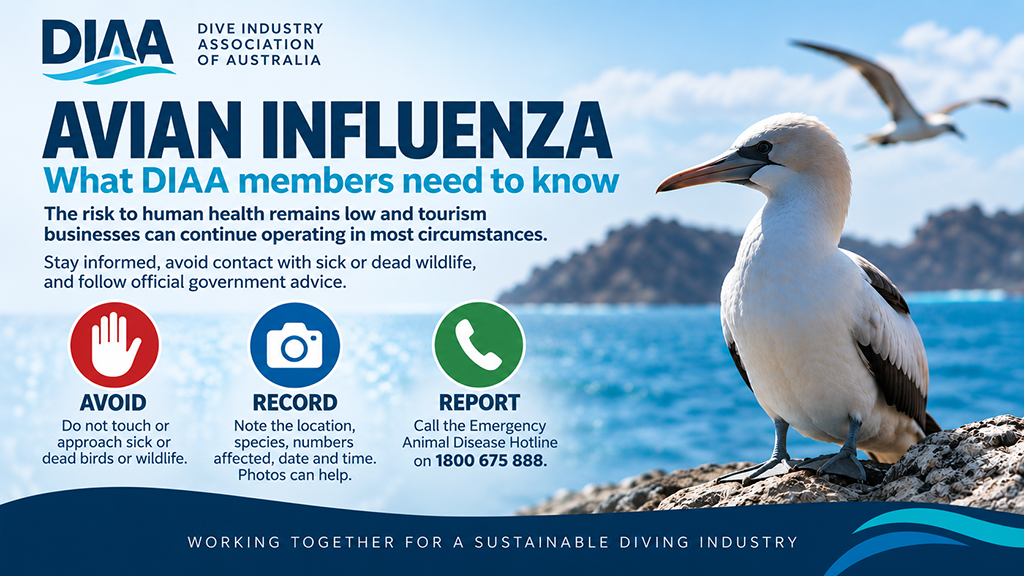
Information provided to NSW marine park permit holders by the Department of Primary Industries and Regional Development (DPIRD) confirms that marine tourism activities can generally continue as normal. If the risk increases in a particular location, additional biosecurity measures or temporary access restrictions may be introduced, with affected operators advised directly.
The situation is evolving. As of 11 September 2026, NSW had recorded 30 H5 bird flu events, including detections in coastal locations and seabird species. NSW authorities continue to advise that the risk to human health remains low.
For dive centres, liveaboards, charter operators and other businesses working around coastal islands, seabird colonies and marine parks, the key message is simple: stay informed, avoid contact with sick or dead wildlife, and follow official government advice.
What is H5 bird flu?
H5 bird flu is a highly pathogenic strain of avian influenza that primarily affects birds, although overseas it has also infected some other animals.
Australia recorded its first detection of the H5N1 strain in June 2026 in a migratory seabird in Western Australia. Since then, detections have been recorded in wildlife in several states, including NSW.
For marine tourism operators, the most relevant concern is the potential impact on wild seabirds and other wildlife, particularly in areas where large numbers of birds congregate.
What should dive and marine tourism operators do?
The advice from authorities is straightforward: Avoid, Record, Report.
If you encounter sick or dead birds or other wildlife:
- Avoid touching or approaching the animal unnecessarily.
- Record the location, species if known, number of animals affected, date and time. Photos or video may also assist authorities.
- Report the incident to the Emergency Animal Disease Hotline on 1800 675 888.
Do not move, collect or dispose of dead wildlife unless specifically instructed to do so by the relevant authority.
Operators should also brief staff and guides so they know what to do if sick or dead wildlife is encountered during a dive trip, shore excursion or vessel operation.
Could marine parks or dive sites be closed?
According to DPIRD advice, detection of H5 bird flu does not necessarily mean that a marine park, attraction or visitor site will close.
If the risk increases, authorities may introduce temporary restrictions or changes to activities at particular locations. Decisions will take into account factors such as where the virus has been detected, the species affected, evidence of transmission and potential risks to wildlife and people.
The intention is for any measures to be proportionate to the identified risk and to avoid unnecessary disruption to unaffected tourism activities.
Operators directly affected by restrictions should receive specific advice about what measures apply and any changes they need to make.
Frequently Asked Questions
Can tourism businesses continue operating?
Yes, in most circumstances.
If the H5 risk increases, particular activities or locations may become subject to additional biosecurity requirements or access restrictions. Authorities have indicated that measures would be based on the circumstances at the time and would seek to minimise unnecessary disruption to tourism businesses and visitors.
Are divers, visitors and passengers at risk?
The current advice is that the risk to human health remains low.
Members of the public should not touch sick or dead birds or other wildlife. Dogs should be kept on leads in affected areas, and visitors should follow any local directions or restrictions.
Will marine parks, islands or attractions close if bird flu is detected?
Not necessarily.
A detection does not automatically trigger closure. Temporary restrictions or changes to activities may be introduced where authorities determine they are necessary to manage a particular biosecurity risk.
What should we do if we find dead birds?
Follow the Avoid, Record, Report approach.
Do not touch or move the bird. Record the location, species if possible, number of animals affected and the date and time, then report it to the Emergency Animal Disease Hotline on 1800 675 888.
How is the response being managed in NSW?
The H5 bird flu response is being led by NSW DPIRD, working with agencies including the Department of Climate Change, Energy, the Environment and Water, NSW National Parks and Wildlife Service and other government bodies.
NSW is also participating in the nationally coordinated response, with surveillance, preparedness and wildlife risk management being undertaken across jurisdictions. Tourism organisations, marine park representatives and operators are also being briefed as the situation develops.
Will operators be notified if restrictions affect them?
According to DPIRD, operators directly affected by additional measures or restrictions should receive advice outlining what applies, where it applies and any changes required to their activities.
Where to find the latest information
Because the situation is changing, DIAA members should rely on official government sources for current advice rather than social media or unverified reports.
NSW Department of Primary Industries and Regional Development – Avian Influenza
Current NSW detections, biosecurity advice and response information.
NSW DPIRD Avian Influenza information
Australian Government – Bird Flu information
National information, current detections, reporting advice and preparedness information.
Australian Government H5 bird flu information
Australian Government – H5 Bird Flu FAQs
Detailed information about H5 bird flu, detections in Australia and risks to wildlife and other animals.
Australian Government H5 bird flu FAQs
NSW Health
For current advice relating specifically to human health and potential exposure.
Emergency Animal Disease Hotline: 1800 675 888
Use this number to report suspected cases, including sick or dead wild birds.
What this means for DIAA members
At this stage, there is no general requirement for dive or marine tourism businesses to stop operating because of H5 bird flu.
The most useful steps are to stay informed, make sure staff understand the Avoid, Record, Report procedure and monitor official advice for the locations in which you operate.
For businesses visiting islands, seabird nesting sites, marine parks and other wildlife-rich coastal areas, it may also be useful to incorporate H5 awareness into pre-departure staff briefings and operational procedures.
The DIAA will continue to share relevant information with members as government advice and the H5 response develops.